


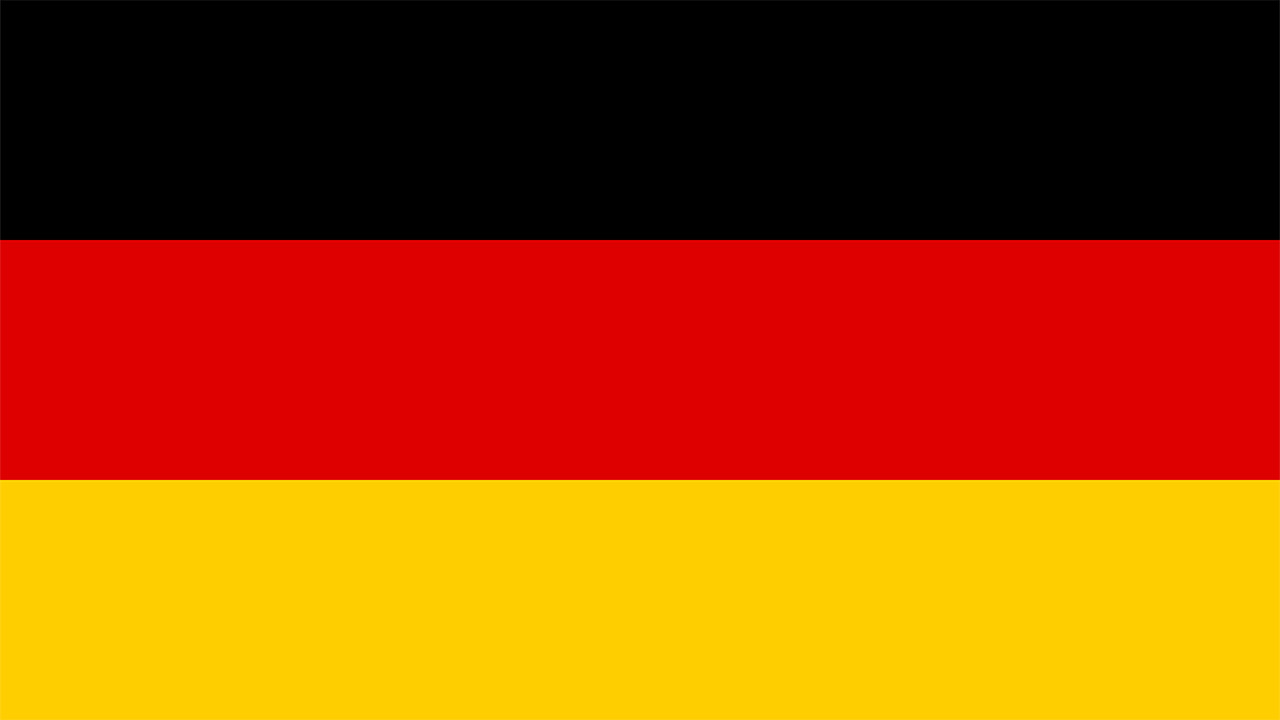
jahane-gardesh-Germany (Deutschland) with the official name of the Federal Republic of Germany, is a country in Central Europe. This country is the second most populous country in Europe after Russia and the most populous country in the European Union. Germany is located between the Baltic Sea in the north and the Alps in the south.
In terms of location, Germany is neighboring with 9 other countries. It is bordered by Denmark from the north, Poland and the Czech Republic from the east, Austria and Switzerland from the south, and France, Luxembourg, Belgium and the Netherlands from the west. The capital of this country is Berlin, its financial center is Frankfurt and the largest urban area of this country is the Ruhr Region.
Ranking:
Germany is known as the “Country of poets and thinkers”. This country has the largest national economy in Europe and the fourth largest economy in terms of GDP in the world.
Germany is one of the largest producers of board games in the world and has been responsible for inventing many of the greatest strategy board games.
Culture:
There are various stereotypes about German people…
… like they like to spend their time on a folding chair at the beach on their days off or find out the departure times of public transport. These things show their attention to planning and timing. Of course, there are more stereotypes about this populous country.
Language and population:
Germany and has a population of about 85 million
:Celebrities
1. Albert Einstein
2. German philosopher Friedrich Nietzsche
3. Famous composer Beethoven
4. Angela Merkel
5. Michael Schumacher
6. Herman Herse, the great writer
7. Johann Wolfgang the great chemist
8. Heinrich Hertz
Angelina Jolie, Taylor Swift, Leonardo DiCaprio all have German roots
:Currency
euro
:Historical background
In ancient times, tribes called Germans occupied the central and northern parts of Europe. One of the Germanic tribes was called the Franks. After the defeat of the Roman Empire, this people formed a government in the Gol region. The Franks establish the government of the Frankish Kingdom. Their most famous king was Charlemagne, who was able to add the northern part of Italy to his territory. After Charlemagne, the fight between his grandsons over the kingdom and the Carolingian dynasty is divided into three categories. The Germanic part arose from the eastern part of the Frankish territory. In 936, Otto I was enthroned in Rome by Pope John XII and started a new empire, becoming the first German emperor.
Land of Prussia:
In the early years of its existence, Prussia was home to the West Balti tribe, who called themselves Prussians. King Wilhelm I ascended the throne of Prussia in 1858. He disagrees with the Prussian State Council over army reforms. To get rid of these differences, he chooses Autophon Bismarck as his prime minister. Bismarck leads Prussia into three successive wars, resulting in Wilhelm I becoming the king of the German Empire. Prussia was considered the main and most important state of the German Empire. During this period, the Germans had problems with the Pope, and this caused the disconnection with the Pope. At the same time, Martin Luther created the Protestant religion and formed the Protestant Union in 1608. These differences cause various wars and two powerful governments of Austria and Prussia appear in Germany.
In 1861, Germany attacked Denmark with the help of Austria and defeated it, and then attacked Austria and France and defeated them too. After the victory over France, Wilhelm became the first Kaiser of Germany and Bismarck became the first chancellor in history. It becomes Germany. This period in history, after the Roman Empire and before the Nazis (Third Reich) came to power, is called the Second Reich period. The German Empire continued until the November Revolution of 1918 and the formation of the Weimar Republic. The core of this empire was the North German Confederation. It was a federal empire with parliament and the cabinet was run by the chancellor (Bismarck).
World War I, which lasted four years (1918-1914), caused the fall of the Austro-Hungarian, German, Ottoman and Russian empires. In 1918, the First World War ends with the signing of the peace treaty. Germany’s defeat in this war caused a lot of financial and human losses to this country, it had reached a point where one US dollar could buy 4 trillion and 200 billion German marks.
The German revolution that took place from 1918 to 1919 is also called the November Revolution. On November 3, thousands of sailors protested, followed by workers and soldiers. During this revolution, the Kaiser’s empire is overthrown and the Weimar Republic is established. In 1919, the members of the German parliament (Reichstag) in Weimar prepare the constitution.
World War II
This war lasted from 1939 to 1945. In this war, the superpower countries were divided into allies and allies and faced each other. This war ends in 1945 with the fall of Berlin by the Russian Red Army and the surrender of Germany and Japan (with the attack of two atomic bombs). After the end World War II in 1945, the Allies divide Germany into several parts. In order to prevent East Germans from fleeing to West Germany, the Berlin Wall is built. This wall became the main symbol of the Cold War and was nicknamed the Iron Curtain. Even though the border between West and East Germany was closed, the citizens of Berlin could still travel between the two Germanys. From 1975 to 1961, travel was generally prohibited and the borders were closed.
In 1989, after the resignation of the East German leader and replaced by Egon Kerns, residents of East Germany were allowed to apply to go to West Germany. get a visa A large population gathered at the borders and because the government was not prepared to deal with such a population, the borders were opened and November 9, 1989 was called the day of the fall of the Berlin Wall. When the Soviet government fell, the two East and West Germany were united and in 1990 the republic The federal government of Germany is officially formed.
Get to know some of Germany’s top tourist attractions with the :jahane_gardesd
Battle of the Nations monument in Lampzig, Germany
Leipzig is the most important city of Saxony and also the location of one of the largest and most prominent historical monuments in Europe called the Battle of the Nations. The Battle of the Nations Monument was built to commemorate the Battle of Leipzig in the Napoleonic Wars. More than 100,000 soldiers lost their lives in the Battle of Leipzig. The Battle of Leipzig took place in 1813, but its monument was unveiled in 1913. This building has now been turned into a museum. In this museum, works are displayed that provide explanations about the battle of Leipzig and the Napoleonic wars.

Aachen Cathedral, Germany
Aachen Cathedral, located on the border of Belgium and the Netherlands, is the oldest cathedral in Northern Europe and one of the other tourist attractions in Germany. The construction of the Aachen church began in the 8th century and its design is a combination of Gothic and Carolingian styles. Aachen Cathedral was built by order of King Charlemagne. Here also many coronations took place. One of the most interesting things you will see when visiting Aachen Cathedral is the bronze doors from the 9th century and its golden tiling.

Saxon National Park
Saxon Switzerland National Park, not far from Dresden, is a very large park near the Alps. The Saxon National Park continues to the Czech Republic. On the Czech side, it is called the National Park of Bohemian Switzerland. Among the attractions of Saxon Switzerland National Park are the Alpine river and stunning rock cliffs, deep valleys and miles of beautiful hiking trails. Mountaineering and rock climbing are also popular sports in Saxon National Park.

Prepared and arranged by: Mahdia Rezaei Shad

No Comment